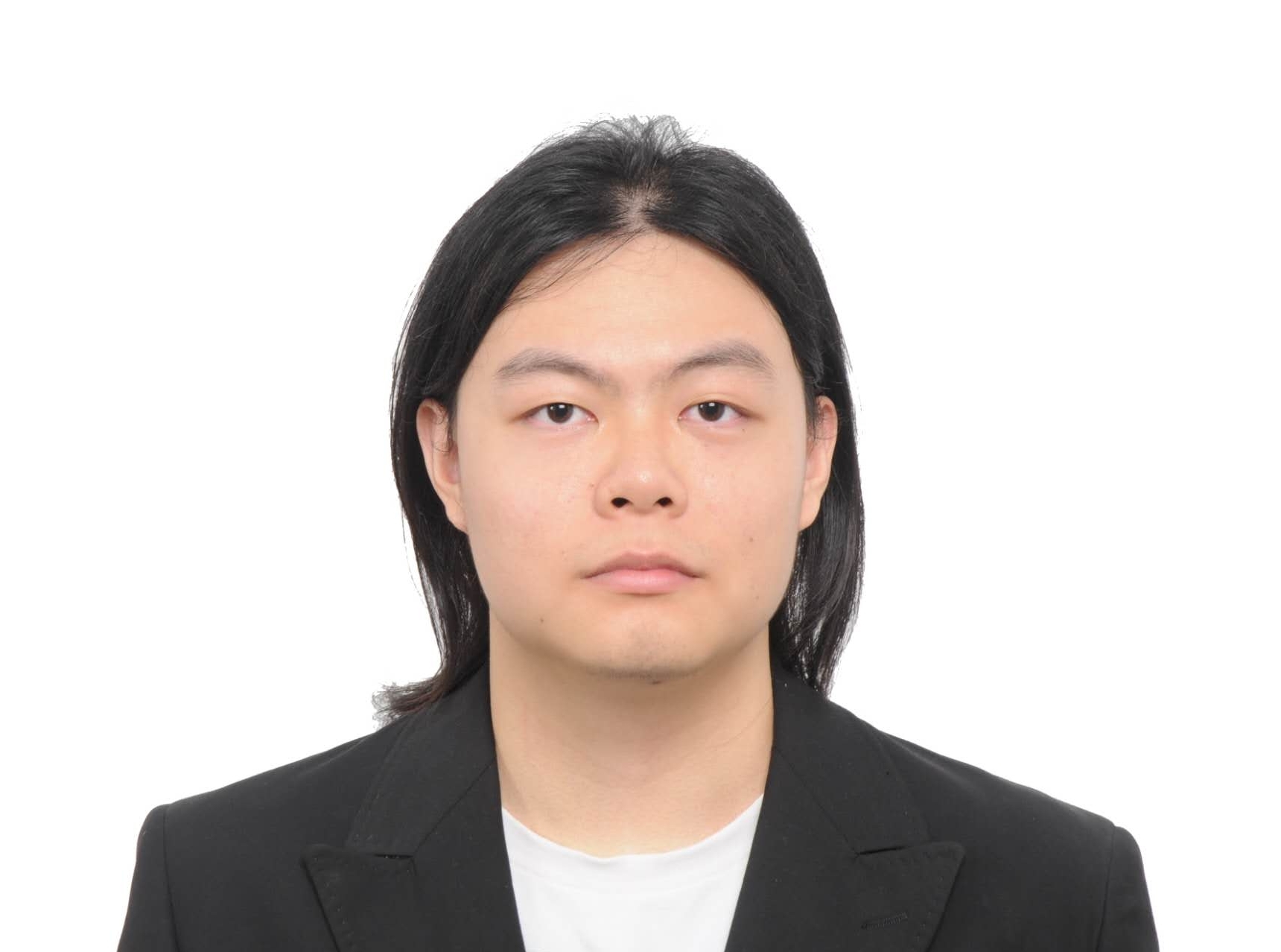
The accepted ECCV 2026 paper, Closing the Capacity-Convergence Gap: Globally Optimal Configuration of Implicit Neural Representations, introduces OptiINR for principled global configuration of implicit neural representations. Congrats to Sipeng Chen .

Welcome
The PML4SC Lab develops probabilistic machine learning methods for AI for Science, integrating physical system analysis with data-driven modeling. We study how physical insights can improve the reliability and efficiency of machine learning, while flexible statistical models help discover, approximate, and optimize complex scientific systems.
Our research spans uncertainty-aware modeling, surrogate modeling, operator learning, physics-informed machine learning, multi-task and transfer learning, and interactive optimization for scientific discovery.
News
The accepted ICML 2026 paper introduces RAMBO, a Bayesian optimization framework that uses Dirichlet process mixtures of Gaussian processes to adapt to heterogeneous objective regimes and improve uncertainty-aware search across scientific design tasks. Congrats to Yan Zhang .
The accepted IJCNN 2026 paper presents COMPOL, a unified neural operator framework that models interactions among coupled physical processes with recurrent and attention-based feature aggregation for scalable multi-physics simulations. Congrats to Junqi Qu .
Yifan Dou joined the PML4SC lab. Welcome!
Sipeng Chen joined the PML4SC lab. Welcome!
Yan Zhang joined the PML4SC lab. Welcome!
Junqi Qu joined the PML4SC lab. Welcome!
PML4SC lab founded
The PML4SC lab was established.